0DTE During Low-Vol Regimes
How to trade 0DTE options when market volatility is dead. Learn how to adapt your strategies for range-bound, quiet markets with heavily compressed premiums.
Trade the Quiet Market
Stop forcing breakouts. Learn to systematically profit from sideways consolidation.
The Frustration of the Low-VIX Environment
Every 0DTE trader loves a volatile market. Big swings mean big premiums, massive breakouts, and fast profits. But markets do not trend constantly. Frequently—often for months at a time during the summer or late fall—the market enters a “Low-Vol Regime.”
When the VIX drops below 13, the E-mini S&P 500 (ES) seems to paralyze. The daily expected move shrinks to less than 0.5%. The market opens, chops sideways in a brutal, algorithmic 10-point range, and closes exactly where it started.
For the uneducated 0DTE trader, this environment is a meat grinder. Breakout buyers get chopped to pieces by false breakouts. Premium sellers realize they are risking $500 just to collect $15 in premium because Implied Volatility is utterly crushed.
To survive and thrive during a low-volatility regime, you must completely overhaul your expectations, your strategy selection, and your position sizing.
The Structural Mechanics of Low Volatility
Why does the market flatline? It is entirely driven by Market Maker hedging dynamics, specifically Positive Gamma.
In a low-VIX environment, institutional portfolios are generally well-hedged and complacent. Market makers have sold a massive amount of Out-Of-The-Money options and are holding heavily Positive Gamma profiles.
When a market maker is long Gamma, they must trade against the market’s momentum to keep their books neutral.
- If the ES rallies 5 points, they sell futures.
- If the ES drops 5 points, they buy futures.
This creates a massive algorithmic dampening effect. Every breakout attempt is immediately suffocated by millions of dollars of dealer selling. Every breakdown is immediately caught by a safety net of dealer buying. The market is structurally forced to mean-revert to the VWAP.
Adapting Your 0DTE Playbook
If you try to use a high-volatility breakout strategy in a low-volatility market, you will bleed your account to death via a thousand tiny stop-losses. Here is how you must adapt:
1. Shift to Strict Mean Reversion
In a low-vol regime, resistance holds and support holds.
- The Strategy: Identify the morning range (e.g., the high and low established between 9:30 AM and 10:30 AM). As the ES slowly drifts up to the morning high, do not buy the breakout. Fade it. Short the ES or buy a 0DTE Put Debit Spread, targeting a return to the daily VWAP.
2. Embrace the Iron Butterfly
When the VIX is low, premium is incredibly cheap. Selling a wide Iron Condor might only yield $20 in premium for $480 of risk—an unacceptable ratio.
- The Strategy: To collect enough premium to justify the risk, you must move your short strikes closer to the current price. The ultimate low-vol strategy is the Iron Butterfly. By selling the At-The-Money (ATM) Call and Put simultaneously, you collect maximum premium, betting that the market will close exactly where it started (the “Pin”).
3. The “Lottery Ticket” Debit Spreads
Ironically, low volatility is the absolute best time to buy directional options for a massive structural swing. Because IV is totally crushed, 0DTE options are dirt cheap.
- The Strategy: If you suspect the low-volatility regime is about to snap (perhaps due to an unexpected news headline), you can buy slightly Out-Of-The-Money Calls or Puts for pennies. Because you are buying when Vega is at the floor, any sudden explosion in volatility will cause your options to instantly multiply in value via Gamma and Vega expansion.
The Psychological Adjustments
Trading a dead market is mentally exhausting. It requires significantly more discipline than trading a crash.
- Reduce Your Frequency: In a high-vol market, there might be 5 great setups a day. In a low-vol market, there might be one. Or zero. Do not force trades out of boredom. Staring at a flat chart for 4 hours will trick your brain into seeing patterns that do not exist.
- Take Profits Immediately: In a VIX 25 market, you can let your winners run. In a VIX 12 market, there are no runners. If your mean-reversion scalp hits 50% profit, take it immediately. The market will reverse on you within 10 minutes.
- Do Not Size Up to Compensate: This is the most common account-killer. A trader sees that premiums have dropped by 50%, so they double their contract size to try and make the same daily income. This destroys their risk management parameters. When the low-volatility regime finally breaks (and it always breaks violently), their oversized position will trigger a catastrophic margin call. Accept the lower income.
Conclusion: The Calm Before the Storm
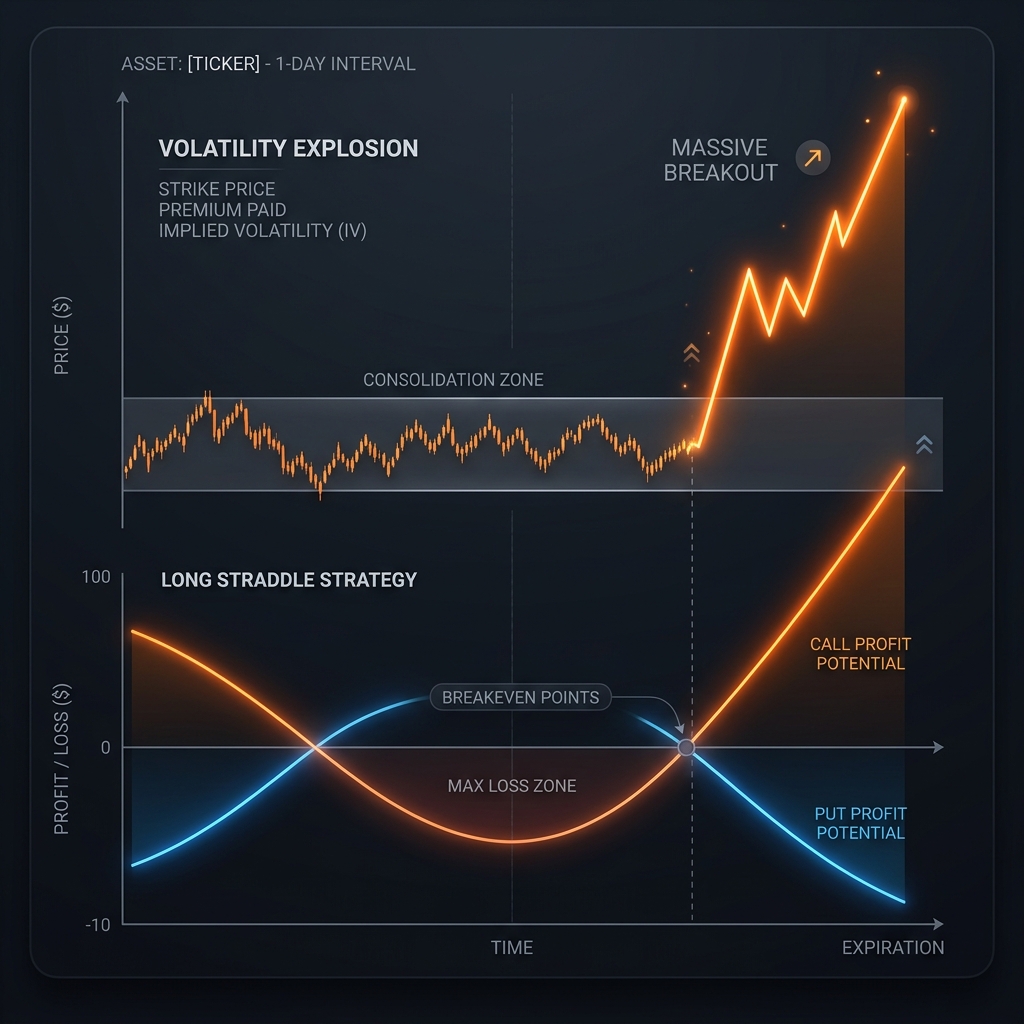
Low volatility does not mean the market is broken; it means the market is accumulating energy. Like a coiled spring being compressed tighter and tighter, a low-VIX regime is simply the precursor to the next massive expansion.
By utilizing mean-reversion scalping, Iron Butterflies, and strict patience, you can steadily extract small, consistent income from the chop. More importantly, by preserving your capital and your mental capital during the quiet times, you will be perfectly positioned to strike when the volatility inevitably explodes.
Profit from the Chop
Stop bleeding capital in sideways markets. Join 01DTE.com to access proprietary Iron Butterfly structuring tools, mean-reversion algorithms, and elite low-volatility education.
Start Trading with 01DTE
Disclaimer: This content is for educational purposes only. Not financial advice. Options trading involves substantial risk. Consult a licensed financial advisor before trading. Full disclaimer
Related Articles
0DTE Credit Spread Strategy
Master the 0DTE credit spread strategy for consistent daily income. Learn exact entry rules, advanced risk management, and optimal market conditions for zero-day credit spreads.
0DTE Covered Call
Master the 0DTE covered call — own shares and sell calls for daily income. A conservative strategy for generating returns from existing positions.
0DTE Cash-Secured Put
Learn the 0DTE cash-secured put — sell puts with cash set aside to buy shares. A conservative income strategy for 0DTE traders.
0DTE Calendar Spread
Master the 0DTE calendar spread — profit from time decay differences between near and far expirations on the same strike.
0DTE Butterfly Spread
Learn the 0DTE butterfly spread — a low-cost, defined-risk strategy that profits from low volatility and precise price targeting.
About the Author
Raheel Nawaz
Subject Matter ExpertOptions trader and educator specializing in 0DTE strategies with over a decade of experience in short-dated options and futures markets.